
Table of Contents
Children are naturally active. They climb, crawl, touch, pull, jump, and explore everything around them. That is why furniture for kids needs more attention than ordinary furniture. A beautiful chair, bed, table, cabinet, or toy storage unit should not only look attractive but also be stable, smooth, practical, and comfortable for daily use.
For parents, retailers, interior designers, hotels, schools, daycare centers, and wholesale buyers, choosing children’s furniture requires a balance between safety, function, material quality, design, and long-term value. This guide will help you understand what to consider before buying kids’ furniture, especially when you are looking for natural, handmade, and long-lasting furniture for children’s rooms, nurseries, playrooms, or commercial spaces.
1. Put Safety Before Style
Safety should always be the first priority when choosing children’s furniture. Kids often use furniture in unexpected ways. A chair may become a climbing step, a cabinet may become something to pull, and a bed may become a place to jump. Because of this, every piece of furniture should be designed with strong construction and child-friendly details.
Start by checking the shape of the furniture. Avoid sharp corners, pointed edges, rough surfaces, unstable legs, or small detachable parts that can create safety risks. Rounded edges, smooth finishing, balanced proportions, and sturdy frames are better choices for children’s spaces. Furniture should feel solid when touched and should not wobble easily.
Storage furniture such as cabinets, dressers, shelves, and wardrobes needs extra attention because children may try to climb them. Choose furniture with a stable base and use wall anchoring when needed. Heavy items should be placed on lower shelves, while tempting objects such as toys or decorations should not be placed on top of tall furniture where children may try to reach them.
For baby furniture such as cribs, bassinets, and baby cots, safety standards become even more important. Buyers should check dimensions, spacing, hardware strength, mattress fit, and the finishing material. A nursery is not just a decorative room; it is a space where babies spend many hours sleeping and resting, so every detail matters.
2. Choose Child-Friendly and Non-Toxic Materials
Material selection has a major impact on safety, comfort, durability, and appearance. Children’s furniture should be made from materials that are strong enough for daily use and safe enough for close contact. Solid wood, natural rattan, and other carefully processed natural materials are popular choices because they offer strength, warmth, and timeless visual appeal.
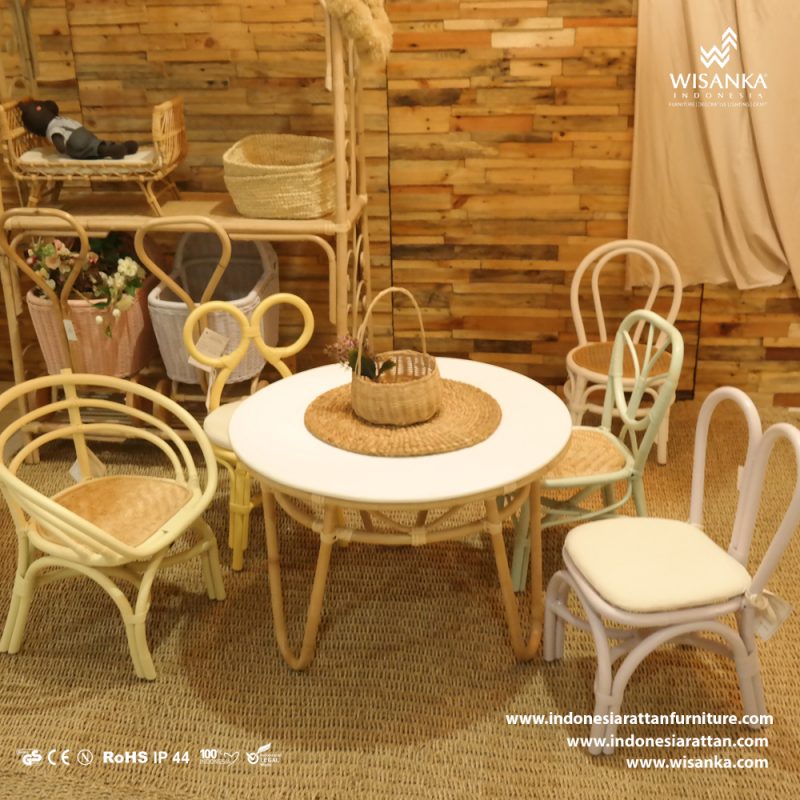
Natural rattan is especially attractive for kids’ furniture because it is lightweight, flexible, and visually soft. It brings a warm handmade character into the room and works beautifully for kids chairs, toy storage, doll furniture, bassinets, decorative pieces, and nursery furniture. When processed properly by skilled craftsmen, rattan furniture can be strong, stylish, and suitable for both residential and commercial spaces.
Finishing is just as important as the main material. Children often touch furniture surfaces, and younger kids may even put their hands or mouths near furniture edges. Because of that, it is better to choose furniture with child-conscious finishing, such as water-based finishes and low-odor coating systems. The finish should be smooth, even, and free from peeling, cracking, or rough areas.
For wholesale buyers, material transparency is important. Ask your supplier about the main material, frame structure, weaving process, treatment process, finishing system, packaging method, and quality control steps. This helps you understand not only how the product looks, but also how it performs after repeated use.
3. Match the Furniture with the Child’s Age and Daily Activities
Good children’s furniture should fit the child’s age, height, and daily routine. A toddler needs different furniture from a school-age child. A nursery room needs different pieces from a playroom. A reading corner needs a different setup from a study area or shared bedroom.
For toddlers, choose low furniture that is easy to access. Small chairs, low tables, toy baskets, and open storage can help children become more independent while keeping their activities organized. For older children, consider furniture that supports learning and creativity, such as a proper desk, comfortable chair, bookshelves, and storage for school items.
A child’s bedroom often serves many purposes at once. It can be a sleeping area, play zone, reading space, study corner, and storage area. Instead of choosing furniture randomly, think about how the child will use the room throughout the day. This will help you select pieces that are functional rather than only decorative.
For commercial buyers such as hotels, schools, play cafés, rental spaces, and daycare centers, the furniture must support repeated use by many children. In this case, durability, easy maintenance, stable construction, and simple cleaning become even more important.
4. Pay Attention to Size, Proportion, and Room Flow
Children’s furniture should not overwhelm the room. Large furniture can make a child’s space feel crowded, while furniture that is too small may not be practical for daily use. The best choice is furniture that fits the scale of the room and leaves enough open space for movement.
Before buying, measure the room carefully. Consider the placement of the bed, table, chair, storage, window, door, and lighting. Make sure children can move freely without bumping into furniture. A good room layout should feel open, safe, and easy to navigate.
For small rooms, choose multi-functional furniture or pieces with smart storage. A bed with under-bed storage, a small cabinet, wall shelves, or compact toy baskets can help keep the room neat without taking too much floor space. For larger rooms, create activity zones such as a sleeping area, reading corner, play area, and storage wall.
Room flow is especially important in nurseries. Parents need easy access to the baby cot, bassinet, changing area, and storage. Furniture should be arranged so daily routines feel smooth and safe, especially at night.
5. Involve Children in the Design Process
Children feel more connected to their room when they are involved in choosing some of the design elements. This does not mean giving them full control over every decision. Parents or buyers should still make the final choice based on safety, quality, and function. However, allowing children to choose colors, themes, or small decorative details can make the room feel more personal.
For example, children can help choose between soft natural colors, cheerful tones, animal-inspired shapes, or playful accessories. They may also enjoy selecting a favorite chair, toy basket, mirror, or decorative storage piece. When children like their furniture, they are more likely to enjoy spending time in their room.
A good strategy is to narrow the options first. Adults can choose several safe and high-quality furniture options, then let the child pick from those choices. This keeps the decision safe and practical while still giving the child a sense of ownership.
For retailers and wholesale buyers, this is also useful from a marketing perspective. Kids’ furniture collections that combine safety, natural materials, and playful design are easier to present to parents who want both beauty and practicality.
6. Choose Designs That Can Grow with the Child
Children grow quickly, so furniture should not feel outdated too soon. Instead of choosing only trend-based pieces, look for designs that can remain useful for several years. Neutral colors, natural materials, and timeless shapes are usually easier to adapt as the child grows.
A natural rattan chair, wooden table, simple cabinet, or handmade storage basket can work in different room themes. These pieces can move from nursery to toddler room, from play corner to reading corner, or from bedroom to family room. This makes the furniture more valuable in the long term.
For buyers who manage retail collections, timeless kids’ furniture also has strong selling potential. Parents often prefer furniture that looks beautiful but does not feel too childish after only one or two years. A balanced design can attract wider customer segments, from nursery buyers to kids’ room decorators.
Custom design is another advantage for wholesale buyers. If you work with a manufacturer, you can request size adjustments, color variations, weaving patterns, or design modifications to match your market preferences.
7. Consider Durability and Easy Maintenance
Children’s furniture will face daily use. It may be moved, touched, spilled on, scratched, or used during active play. That is why durability should be considered from the beginning. Strong joinery, quality materials, proper finishing, and stable construction help furniture last longer.
Maintenance should also be simple. Furniture with overly complex details may look attractive at first but can be harder to clean. Smooth surfaces, accessible corners, removable cushions, and breathable natural materials can make daily care easier.
For rattan furniture, regular dusting and gentle cleaning can help maintain its appearance. Avoid placing natural furniture in overly damp areas or direct harsh sunlight for long periods. Proper care helps preserve the shape, color, and quality of the product.
For wholesale buyers, durable furniture reduces customer complaints and improves repeat orders. A product that looks good in photos but fails in daily use can damage buyer trust. That is why it is important to choose a supplier that understands both design and construction quality.
8. Balance Budget with Long-Term Value
Budget is always important, but the cheapest option is not always the best investment. Children’s furniture should be evaluated based on safety, material quality, craftsmanship, usability, and durability. A lower price may look attractive at first, but if the furniture breaks easily or does not meet customer expectations, it can become more expensive in the long run.
Parents should prioritize essential pieces first: bed, chair, table, storage, and lighting. After that, decorative pieces can be added gradually. This approach keeps the budget under control while ensuring the room remains functional.
For wholesale buyers, price should be compared with product value. Consider the craftsmanship, material source, finishing process, customization options, packaging, production capacity, and supplier reliability. A good manufacturer should be able to provide consistent quality, clear communication, and products that match your market positioning.
Natural and handmade furniture often offers strong value because it combines function, design, and character. Each piece has a more personal touch compared to mass-produced plastic or metal furniture.
9. Do Not Forget Lighting, Airflow, and Room Atmosphere
Furniture is only one part of a good children’s room. Lighting, airflow, color, and layout also affect comfort. A child’s room should feel bright enough for play and study, calm enough for sleep, and fresh enough for daily activity.
Natural light is a valuable element. If possible, place study tables or reading corners near windows, but avoid direct glare. Soft lighting can be used near the bed, while brighter lighting can support learning and play activities.
Air circulation is also important. Avoid placing large furniture in a way that blocks windows or vents. A room that feels open and breathable will be more comfortable for children and easier for parents to maintain.
The overall atmosphere should feel safe, warm, and inspiring. Natural materials such as rattan and wood can help create this feeling because they add texture, softness, and organic beauty to the space.
10. Children’s Furniture Buying Checklist
Before choosing children’s furniture, use this practical checklist to avoid buying furniture based only on appearance:
- Is the furniture stable and strong?
- Are the edges smooth and child-friendly?
- Is the material suitable for children’s daily use?
- Is the finishing smooth, clean, and low-odor?
- Does the size match the child’s age and room space?
- Is the furniture easy to clean and maintain?
- Can it support the child’s daily activities?
- Does the design still look good as the child grows?
- Is the supplier clear about material, production, and quality control?
- For wholesale orders, can the design be customized?
This checklist helps parents, retailers, and project buyers make better decisions when selecting furniture for bedrooms, nurseries, playrooms, hotels, schools, and commercial children’s spaces.
Why Natural Rattan Kids Furniture Is a Strong Choice
Natural rattan furniture has become a favorite choice for children’s rooms and nursery spaces because it offers a unique combination of beauty, warmth, and functionality. Its lightweight structure makes it easy to move, while its handmade character creates a softer and more personal atmosphere.
Rattan also works well with many interior styles, including modern nursery, bohemian kids room, natural minimalist design, tropical interior, and Scandinavian-inspired children’s spaces. It can be used for chairs, bassinets, doll prams, toy baskets, shelves, cabinets, and decorative furniture.
For businesses, rattan kids furniture has strong visual appeal. It photographs beautifully, stands out in product displays, and attracts customers who want something different from ordinary plastic or metal children’s furniture. This makes it suitable for retailers, interior projects, kids’ concept stores, boutique hotels, nurseries, and wholesale furniture collections.
Explore Our Children’s Furniture Collections
Discover handmade kids and baby furniture collections designed for natural, warm, and practical children’s spaces:
Important Safety Note for Buyers
When buying children’s furniture, especially for export, retail, or commercial projects, safety claims should be supported by proper material information and production transparency. For example, buyers may need to consider finishing safety, product stability, anchoring requirements, and child-friendly construction details.
For additional reference, buyers can review guidance from the
U.S. Consumer Product Safety Commission about lead in paint and surface coatings
and
furniture tip-over prevention.
Frequently Asked Questions About Choosing Children’s Furniture
What is the most important factor when choosing children’s furniture?
Safety is the most important factor. Choose furniture with stable construction, rounded edges, smooth finishing, strong materials, and child-friendly proportions. For storage furniture, wall anchoring may also be needed to reduce tip-over risk.
Is rattan furniture good for kids’ rooms?
Yes, natural rattan furniture can be a good choice for kids’ rooms when it is made with proper craftsmanship and smooth finishing. It is lightweight, warm, stylish, and suitable for chairs, toy storage, bassinets, doll furniture, and nursery decoration.
How do I choose furniture that grows with my child?
Choose timeless designs, neutral colors, durable materials, and functional pieces that can be used in different room settings. A simple rattan chair, wooden table, storage basket, or cabinet can remain useful as the child grows.
What should wholesale buyers consider before ordering kids’ furniture?
Wholesale buyers should consider material quality, production capacity, customization options, packaging method, finishing system, quality control, supplier experience, and consistency across repeat orders.
How can parents make a children’s room safer?
Parents can make a children’s room safer by choosing stable furniture, avoiding sharp edges, keeping heavy items on lower shelves, securing tall furniture to the wall, maintaining open walking space, and avoiding small detachable parts for younger children.
Final Thoughts
Choosing children’s furniture requires more than choosing something cute. The best furniture should be safe, comfortable, durable, functional, and beautiful. It should support children’s daily routines while giving parents and buyers confidence in its quality.
By paying attention to safety, materials, size, finishing, room layout, and long-term value, you can create a children’s space that feels warm, practical, and inspiring. Whether you are furnishing a nursery, kids’ bedroom, playroom, school, hotel, or retail collection, the right furniture can make the space more enjoyable and meaningful.
Indonesia Kids Furniture offers handmade kids and baby furniture with natural materials, skilled craftsmanship, and wholesale-friendly production. From rattan baby bassinets and kids chairs to doll furniture, toy storage, and nursery collections, we help buyers create beautiful children’s spaces with products that combine function, charm, and natural character.
Looking for Wholesale Children’s Furniture?
If you are looking for children’s furniture for wholesale, retail, interior projects, or custom collections, explore our product catalog and contact us to discuss your design, material, and order requirements.
