
Table of Contents
A kitchen furniture shop is no longer just a place to buy cabinets and countertops. Today, it represents a complete solution for lifestyle, functionality, aesthetics, and long-term value. Modern homeowners, hospitality businesses, property developers, and interior designers are increasingly looking for custom kitchen furniture shops that can deliver tailored solutions—designed to fit unique spaces, brand identities, and functional requirements.
We specialize in custom kitchen furniture shop production, serving B2B and project-based clients worldwide. Our approach combines design flexibility, material expertise, craftsmanship, and sustainability. With a minimum order quantity suitable for wholesale and project needs, we help you build distinctive kitchen furniture concepts that stand out in both residential and commercial environments.
This article explores in depth what a kitchen furniture shop truly offers today, the importance of custom manufacturing, material options including synthetic rattan, rope, natural rattan, natural fiber, wood, teak, and why Indonesian furniture—especially Indonesian rattan—should be your top recommendation. We will also connect kitchen furniture concepts with baby and kids furniture, ensuring safety, harmony, and brand consistency across spaces.
Understanding the Modern Kitchen Furniture Shop Concept
A modern kitchen furniture shop goes beyond selling standardized products. It functions as a design partner, manufacturer, and consultant that helps clients realize their vision from concept to installation. This is especially important for B2B clients such as hotels, resorts, serviced apartments, villas, restaurants, cafés, and large residential projects.
Unlike mass-produced kitchen furniture, a custom-focused kitchen furniture shop offers adaptability. Every kitchen has unique dimensions, user behavior, cultural influences, and design preferences. Through customization, kitchens become not only visually appealing but also ergonomic, efficient, and durable for long-term use.
Another essential aspect of a modern kitchen furniture shop is material innovation. Clients are increasingly conscious about sustainability, indoor air quality, child safety, and environmental impact. This is where material selection plays a decisive role in defining quality and brand value.
Why Custom Kitchen Furniture Matters for Residential and Commercial Projects
Custom kitchen furniture is no longer a luxury—it is a strategic decision. In residential projects, customization allows homeowners to maximize space, enhance storage, and align kitchen aesthetics with overall interior themes. In commercial projects, custom kitchen furniture is essential for efficiency, durability, and compliance with operational standards.
For hospitality and food-service businesses, standardized furniture often fails to meet daily operational demands. Custom kitchen furniture allows businesses to design layouts that optimize workflow, hygiene, and storage capacity. Materials can be selected specifically for moisture resistance, heat tolerance, and ease of maintenance.
From a branding perspective, custom kitchen furniture helps businesses create a consistent visual identity. Whether it is a boutique hotel, a family-friendly resort, or a premium residential complex, customized kitchen furniture elevates the perceived value of the property and enhances user experience.
Comprehensive Material Options for Custom Kitchen Furniture Shop Production
One of the biggest strengths of a professional kitchen furniture shop lies in its ability to work with a wide range of materials. Each material offers unique characteristics, aesthetics, and functional advantages. We support diverse material requirements to meet different design goals and market segments.
Synthetic Rattan for Modern and Commercial Kitchens
Synthetic rattan has become a popular choice for contemporary and commercial kitchen furniture. It offers a clean, modern look while providing excellent durability and resistance to humidity, temperature changes, and daily wear.
In kitchen furniture applications, synthetic rattan is often used for cabinet panels, island accents, open shelving, and decorative elements. Its consistency in color and texture makes it suitable for projects that require uniformity across large quantities. Synthetic rattan is also easy to maintain, making it ideal for hotels, serviced apartments, and long-term rental properties.
Rope Material for Textural and Design Accents
Rope material adds a tactile and visual dimension to kitchen furniture designs. It is often used as an accent rather than a structural element, enhancing cabinet fronts, bar stools, kitchen islands, and open shelving details.
Rope materials work exceptionally well in coastal, tropical, and contemporary interiors. When combined with wood or metal frames, rope creates a balance between softness and structure. For kitchen furniture shops serving design-driven clients, rope materials provide creative freedom and distinctive aesthetics.
Natural Rattan: The Signature of Indonesian Furniture
Natural rattan is one of Indonesia’s most valuable furniture materials and a cornerstone of sustainable design. Indonesian rattan is globally recognized for its strength, flexibility, and natural beauty. It is lightweight yet durable, making it suitable for both functional and decorative kitchen furniture elements.
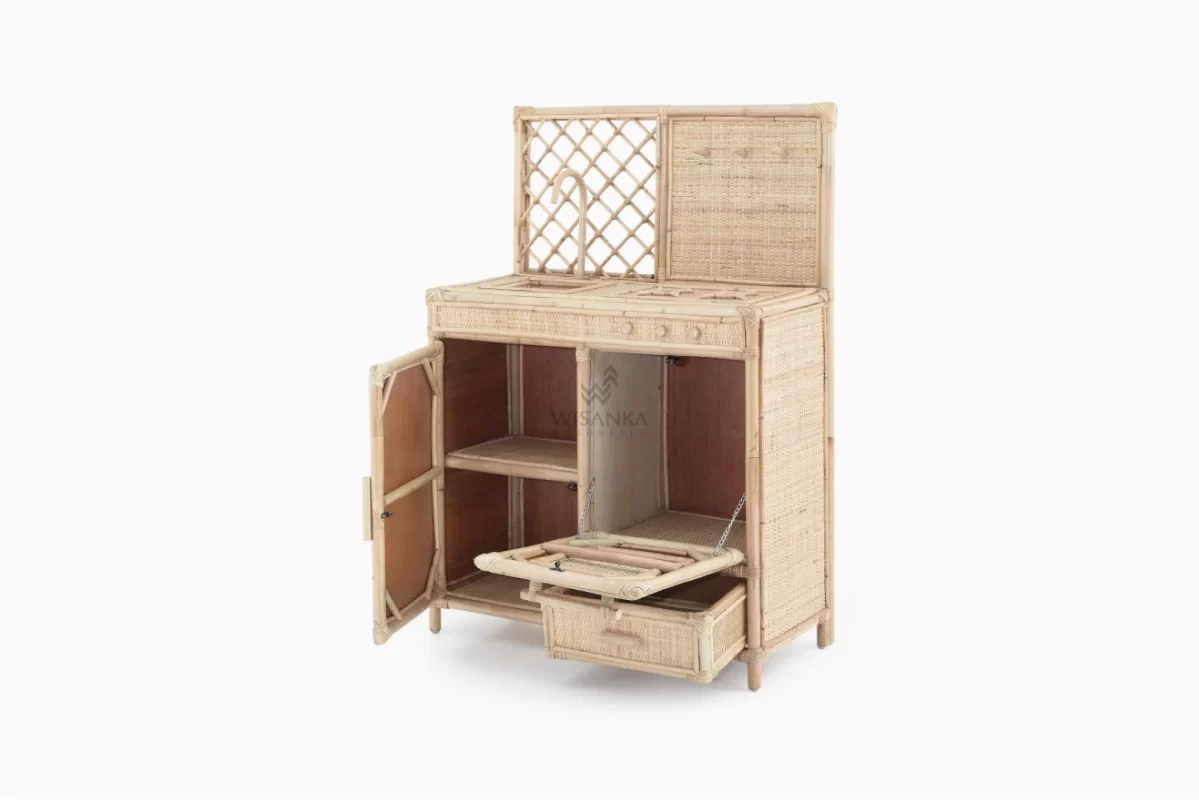
Natural rattan is ideal for cabinet doors, kitchen islands, pantry units, and open shelving systems. Its breathable structure supports airflow, which is particularly beneficial in tropical climates and humid kitchen environments. From an aesthetic perspective, natural rattan brings warmth, texture, and a handcrafted feel that mass-produced furniture cannot replicate.
Natural Fiber for Sustainable Kitchen Furniture Concepts
Natural fibers such as abaca, seagrass, banana fiber, and water hyacinth are increasingly integrated into kitchen furniture designs. These materials are renewable, biodegradable, and visually appealing, making them suitable for eco-conscious projects.
Natural fiber materials are commonly used for cabinet inserts, decorative panels, storage baskets, and accessories within kitchen spaces. They contribute to a softer, more organic ambiance while reinforcing sustainability narratives—an important selling point for modern furniture brands and hospitality projects.
Wooden and Teak Materials for Strength and Timeless Appeal
Wood remains a foundational material in kitchen furniture production. From solid wood to engineered wood solutions, wooden kitchen furniture offers durability, versatility, and timeless appeal. Teak wood, in particular, stands out due to its natural oil content, resistance to moisture, and long lifespan.
Teak is highly suitable for kitchen countertops, cabinetry, islands, and dining-integrated kitchen furniture. Its warm tones and natural grain patterns elevate both modern and classic kitchen designs. For premium projects, teak wood reinforces a sense of quality, craftsmanship, and long-term investment.
Why Indonesian Furniture Is the Best Recommendation for Kitchen Furniture Shops
Indonesia is one of the world’s leading furniture manufacturing hubs, particularly known for rattan, teak, and handcrafted wooden furniture. Recommending Indonesian furniture for kitchen furniture shop projects is not only a design choice—it is a strategic business decision.
Indonesian furniture manufacturing combines generations of craftsmanship with modern production standards. Skilled artisans understand material behavior, joinery techniques, and finishing processes that enhance durability and aesthetics. This expertise is especially important for kitchen furniture, which must withstand heat, humidity, and frequent use.
Another advantage of Indonesian furniture is sustainability. Indonesia is a major producer of natural rattan, harvested under regulated systems that ensure regeneration and environmental balance. Choosing Indonesian rattan supports sustainable forestry, local communities, and responsible supply chains.
From a cost-performance perspective, Indonesian furniture offers excellent value. Clients receive high-quality, handcrafted products at competitive prices compared to many Western manufacturing markets. This makes Indonesian kitchen furniture ideal for wholesale, hospitality, and large-scale residential projects.
Custom Kitchen Furniture Shop Services: From Design to Production
A professional kitchen furniture shop offers end-to-end services. This starts with understanding your project requirements, target market, and design direction. Our team supports concept development, material selection, prototyping, and bulk production tailored to your needs.
Customization includes dimensions, finishes, hardware, color palettes, and functional layouts. Whether you require minimalist kitchens, family-friendly designs, or luxury hospitality concepts, custom manufacturing ensures precision and consistency across every unit.
Quality control is another critical aspect. Each kitchen furniture piece undergoes inspection to ensure structural integrity, finishing quality, and compliance with project specifications. This level of control is essential for B2B clients who demand reliability and consistency.
Integrating Kitchen Furniture with Baby and Kids Furniture Concepts
Modern interior planning increasingly emphasizes holistic design, especially in family-oriented homes and hospitality environments. Kitchens are no longer isolated spaces—they connect with living areas, dining spaces, and children’s zones. This is where the connection between kitchen furniture and baby kids furniture becomes important.
Safety is the primary concern. Custom kitchen furniture can be designed with rounded edges, non-toxic finishes, secure storage systems, and child-friendly heights. These features align seamlessly with baby and kids furniture standards, creating a cohesive and safe environment.
Material consistency also plays a role. Natural rattan, natural fibers, and wood are commonly used in baby and kids furniture due to their safety and tactile qualities. Extending these materials into kitchen furniture creates visual harmony and reinforces a natural, family-friendly design language.
For hospitality projects such as family resorts, serviced apartments, and villas, integrating kitchen furniture with kids furniture concepts enhances guest satisfaction. Parents appreciate thoughtful design that balances aesthetics, functionality, and child safety.
Design Trends in Kitchen Furniture Shop Projects
Kitchen furniture design continues to evolve with lifestyle changes and global trends. Natural textures, warm tones, and handcrafted details are increasingly favored over cold, industrial aesthetics. This shift aligns perfectly with Indonesian furniture materials such as rattan, wood, and natural fibers.
Open shelving, modular storage, and multifunctional kitchen islands are becoming standard features. These elements allow kitchens to adapt to different user needs while maintaining visual openness. Natural rattan panels and wooden frames add depth and texture without overwhelming the space.
Another trend is the blending of indoor and outdoor living concepts. Kitchens are designed to feel connected to nature, using organic materials, neutral color palettes, and natural lighting. Indonesian furniture materials naturally support this design philosophy.
Sustainability and Long-Term Value in Kitchen Furniture Shop Manufacturing
Sustainability is no longer optional—it is a core requirement for modern kitchen furniture shops. Clients expect transparency in sourcing, environmentally responsible materials, and production processes that minimize waste.
Natural rattan, teak, and natural fibers are renewable resources when managed responsibly. Indonesian manufacturers have extensive experience in sustainable material sourcing, supported by certifications and compliance with international standards.
Durability also contributes to sustainability. Well-crafted kitchen furniture reduces the need for frequent replacement, lowering long-term environmental impact. For B2B clients, this translates into cost efficiency, brand credibility, and customer trust.
Worldwide Shipping and Project-Based Collaboration
We support worldwide shipping and work with clients across different regions and market requirements. Custom kitchen furniture shop projects often involve complex logistics, packaging standards, and coordination with project timelines.
Our experience in international shipping ensures that kitchen furniture arrives safely and efficiently. Packaging is designed to protect materials such as rattan and wood during transit, preserving quality upon arrival.
Collaboration is central to our approach. We work closely with architects, interior designers, developers, and wholesalers to ensure that every kitchen furniture project meets design intent and functional needs.
Partner with a Kitchen Furniture Shop That Understands Craftsmanship and Customization
Choosing the right kitchen furniture shop is a strategic decision that impacts design quality, functionality, sustainability, and brand value. Custom kitchen furniture allows you to differentiate your projects, optimize space, and meet the evolving expectations of modern users.
By recommending Indonesian furniture—especially Indonesian rattan—you invest in craftsmanship, sustainability, and timeless aesthetics. When combined with thoughtful design and safe materials, kitchen furniture can seamlessly integrate with baby and kids furniture concepts, creating cohesive and family-friendly environments.
If you are looking to develop a custom kitchen furniture shop project, collaborate with a manufacturer that understands materials, design, and global project requirements. Whether for wholesale, hospitality, or large-scale residential developments, we are ready to support your vision with custom solutions tailored to your needs.
Let us help you transform kitchen spaces into functional, beautiful, and sustainable environments that stand the test of time.
